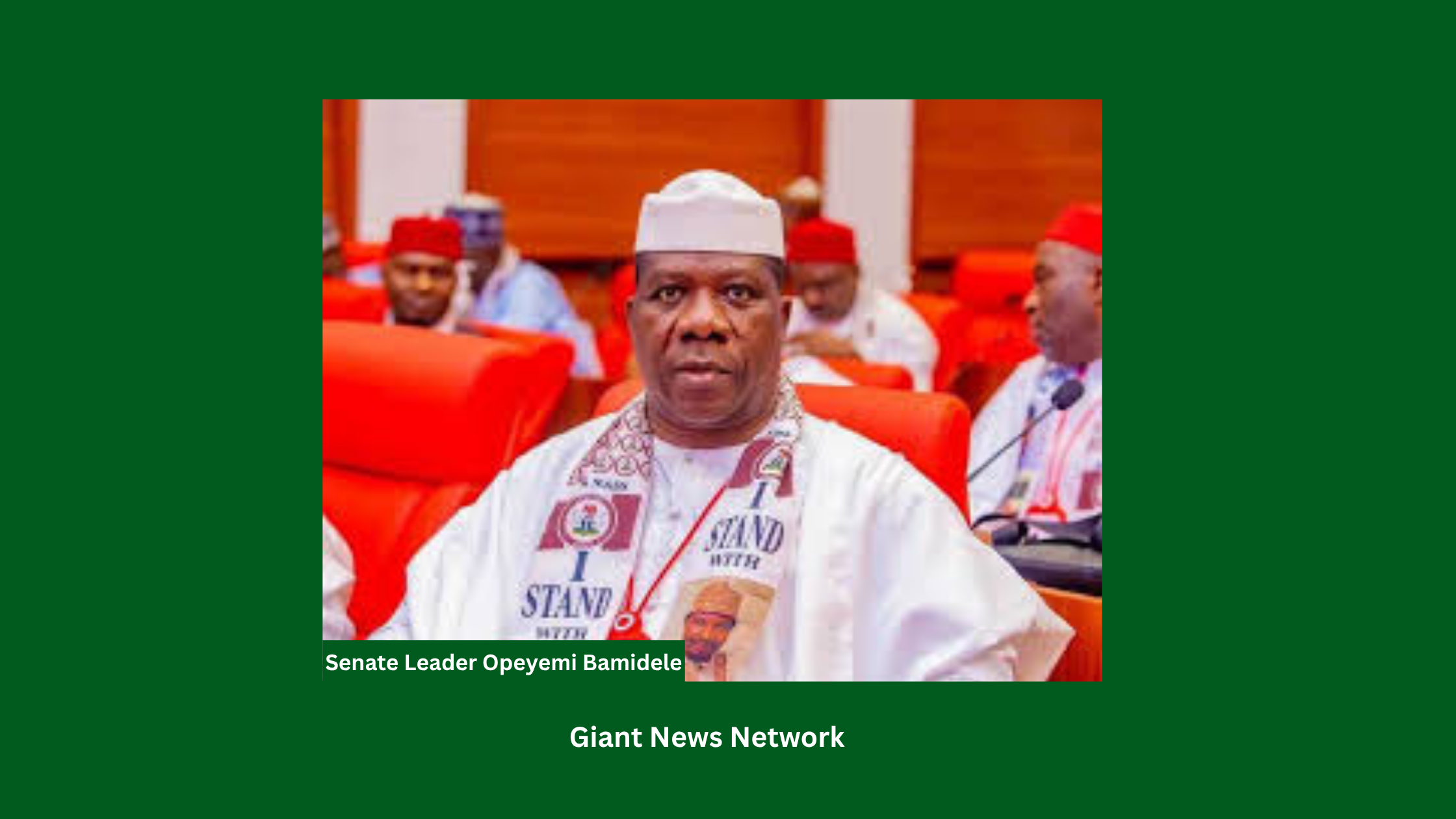
In a clear push for deep constitutional reform, Senate Leader Opeyemi Bamidele has reassured Nigerians that the forthcoming zonal public hearings on amending the 1999 Constitution will be open, inclusive, and driven by public participation.
Speaking in a midterm statement released on Wednesday, Bamidele — who represents Ekiti Central Senatorial District — stressed that the Constitution Review Committee is prepared to listen to all voices across the country.
“The Constitution Review Committee will soon commence zonal public hearings. We assure Nigerians that the process will be inclusive and participatory,” he stated.
According to Bamidele, correcting Nigeria’s long-standing structural imbalances is an urgent priority if the nation’s democracy is to thrive. He underlined the need for far-reaching reforms to address core issues that have, for too long, held back national unity and development.
Beyond Counting Bills — A New Legislative Vision
In what appears to be a subtle response to critics, the Senate Leader explained that the current 10th Assembly is not merely focused on the number of bills passed.
“Our legislative agenda goes beyond numbers. It reflects the National Assembly’s expanded oversight responsibilities and its responsiveness to citizen concerns,” Bamidele declared.
Providing a breakdown of legislative activity from June 2023 to June 2025, Bamidele revealed that 983 bills were introduced — with a 6% rise in the second session (506 bills) compared to the first (477 bills). Even more telling, the number of bills passed increased by a staggering 232% — from 25 in the first session to 83 in the second. The passage of executive bills also doubled from 13% to 26%.
Human Capital Development and Economic Legislation
Among the Senate’s recent legislative achievements, Bamidele pointed to the Student Loan (Access to Higher Education) Act, 2024, as a landmark effort to support Nigeria’s youth.
Over one million students have already applied for loans via the Nigerian Education Loan Fund (NELFUND) — with 500,000 beneficiaries recorded so far.
“This is real progress in human capital development,” he noted.
On the economic front, pending tax reform bills are expected to boost investor confidence and significantly expand Nigeria’s economy. The Senate projects that if these reforms are implemented, Nigeria’s GDP could grow from $363.8 billion to $1 trillion by 2030 — a bold but necessary target for Africa’s largest economy.
Defending the 10th Senate: No Rubber Stamp
In response to widespread criticism labelling the legislature as a “rubber stamp” for the executive, Bamidele firmly pushed back.
“The adversarial posture of previous Assemblies often hampered governance. This Assembly has pursued constructive engagement without compromising our constitutional independence,” he said.
To back up this claim, Bamidele cited a rise in Senate oversight activities:
- Petitions handled increased from 50 to 80 this past year.
- A total of 215 executive appointments were reviewed and confirmed in the first session.
The Road Ahead: Economic Stability, Security & Electoral Reform
Looking forward, Bamidele promised that the Senate’s priorities will focus on:
- Strengthening fiscal and monetary stability
- Tackling inflation
- Advancing infrastructure and national security
- Driving electoral reform to protect democratic processes
“We must work together to build a political structure that reflects our aspirations and protects our democracy,” he stated.
In a final call to action, Bamidele reaffirmed the Senate’s unwavering commitment to deepening democracy and national development, and urged Nigerians to actively engage in the ongoing legislative process.
“We are ready for the road ahead, and we invite all Nigerians to walk it with us,” he declared.