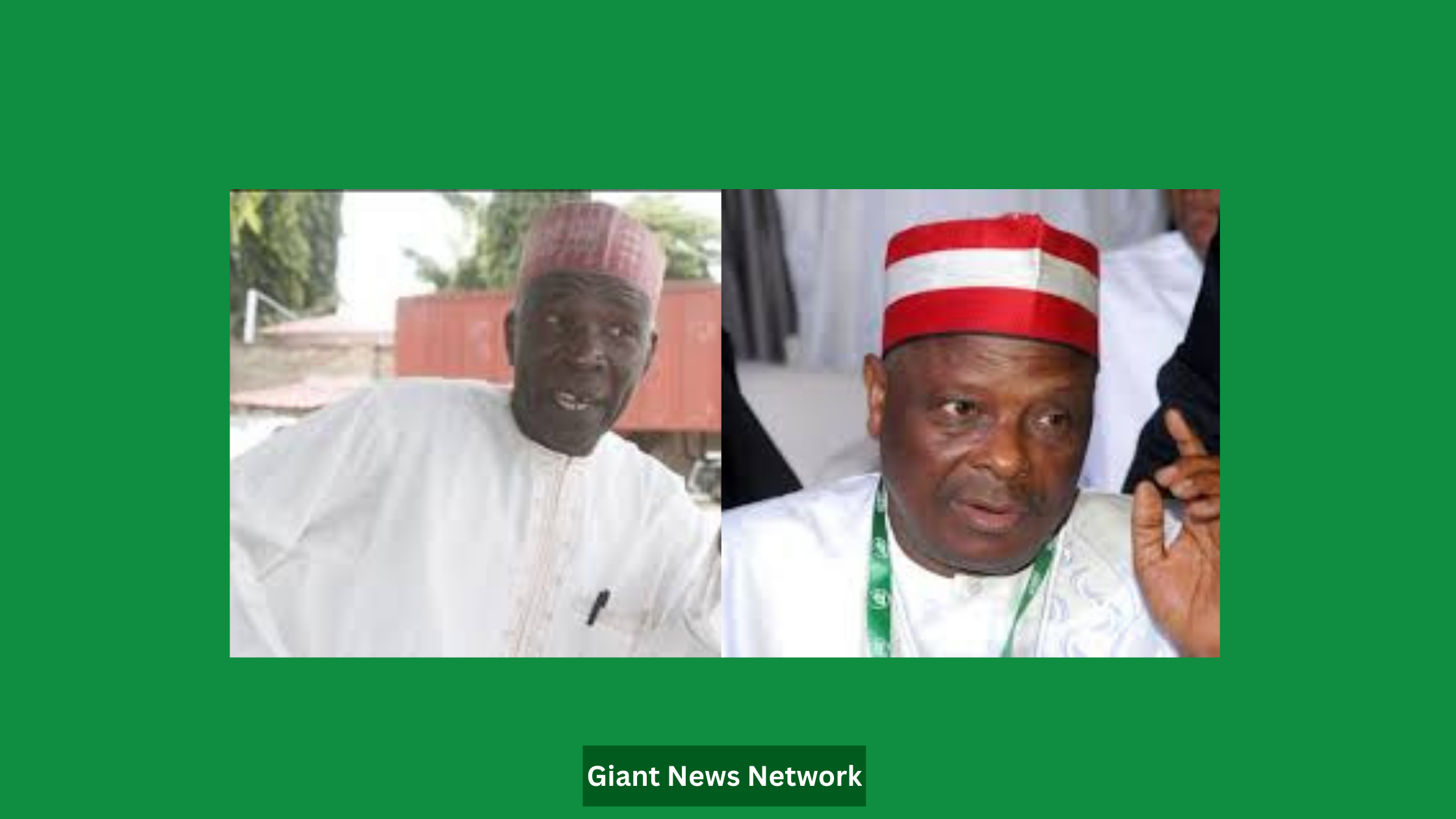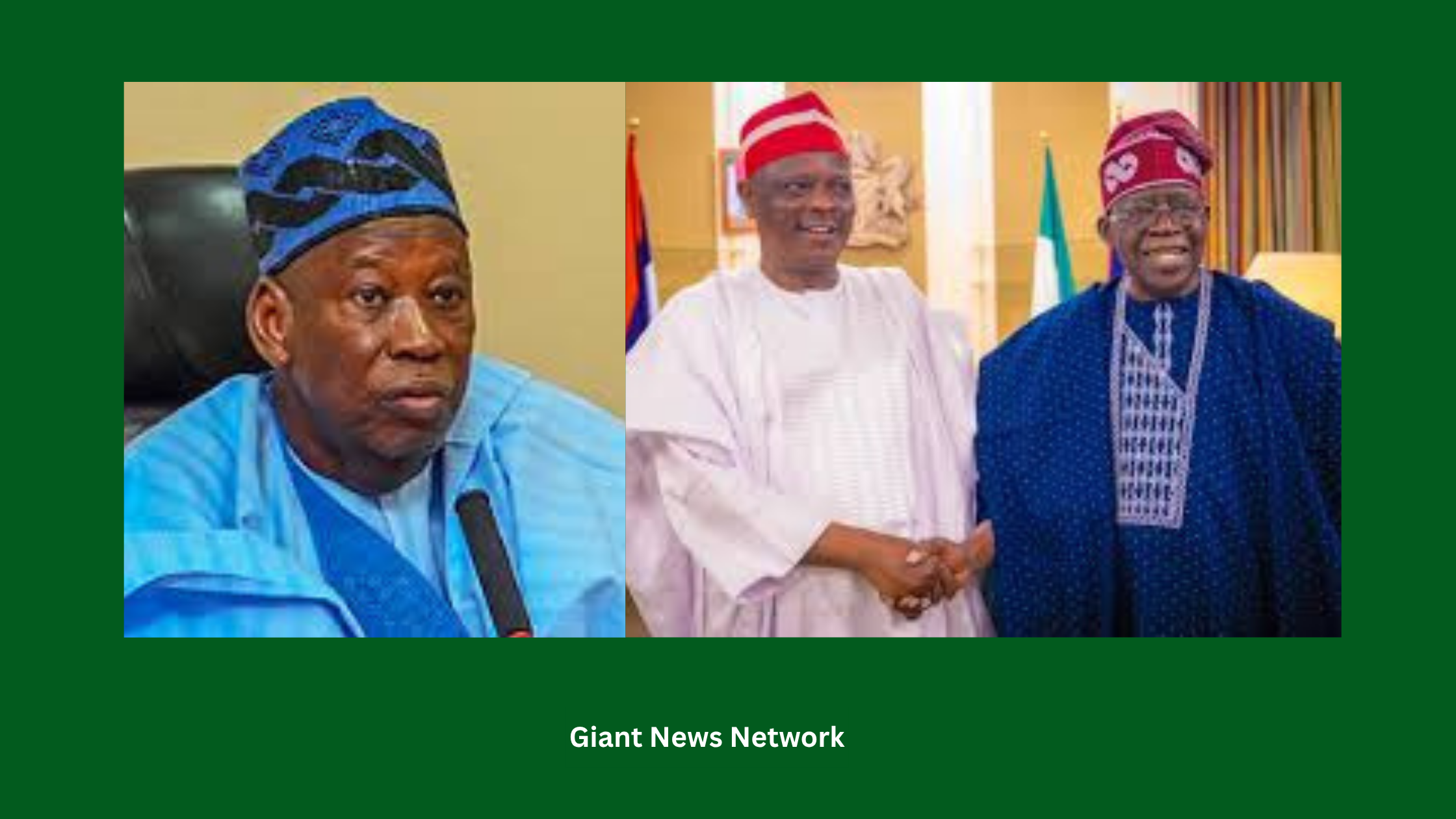
In a dramatic turn of events that has thrown the All Progressives Congress (APC) into fresh turmoil, Dr. Abdullahi Umar Ganduje has reportedly resigned as the National Chairman of the ruling party — a decision linked to a high-level political arrangement involving President Bola Tinubu and one of Ganduje’s fiercest political rivals, Rabiu Musa Kwankwaso.
Sources within the party disclosed that Ganduje tendered his resignation on Friday afternoon, following speculations that the former Kano State governor and leader of the New Nigeria Peoples Party (NNPP), Kwankwaso, is set to join the APC under a deal allegedly brokered by the Presidency.
Behind the Resignation: Personal Feud or Political Strategy?
Ganduje’s resignation — though initially denied and resisted by key party figures — was later confirmed by multiple sources, including former presidential aide Bashir Ahmad and Ganduje’s close associate, Salihu Yakasai.
According to an insider who spoke to Saturday PUNCH, the APC secretariat had been thrown into confusion as early as 3pm Friday, with top officials desperately pleading with Ganduje to reconsider his decision. However, by 4:15pm, he reportedly made his exit official.
“We couldn’t stop him. He’s angry that Kwankwaso is being welcomed into the party. It’s deeply personal for him,” a source revealed.
The tension stems from a long-standing rift between Ganduje and Kwankwaso, who were once political allies under the PDP but later became bitter enemies. Ganduje had served as Kwankwaso’s deputy between 2011 and 2015 before succeeding him as Kano Governor — a succession that marked the beginning of their fierce rivalry.
Their conflict deepened in 2020 when Ganduje dethroned Emir Sanusi Lamido, a traditional ruler believed to be loyal to Kwankwaso. The political tables turned again this year when Sanusi was reinstated by Governor Abba Kabir Yusuf — Kwankwaso’s protégé — further souring Ganduje’s position.
Sacrifices and Political Realignments
Adding fuel to the fire, Buba Galadima, a known Kwankwaso ally, hinted at a deeper conspiracy involving the Presidency and APC leadership to “sacrifice both Ganduje and Vice President Kashim Shettima” in order to bring new power blocs into the party.
“I know of a meeting that held three days ago involving key APC figures and the Presidency where such a decision was discussed,” Galadima told journalists.
The speculation suggests that President Tinubu may be realigning forces within the APC, possibly to consolidate control or prepare for future political battles — a move that some say could backfire if party unity crumbles.
Meanwhile, officials from Kwankwaso’s camp and the NNPP have either denied knowledge of the defection or refused to comment. The NNPP spokesperson, Ladipo Johnson, remained tight-lipped when contacted.
Who Takes Over? APC Set to Appoint Acting Chairman
In line with the party’s constitution, Ali Dalori, the Deputy National Chairman (North), is expected to step in as Acting Chairman pending further decisions by the National Working Committee (NWC).
Party supporters were seen gathered at the APC National Secretariat in Abuja, expressing shock and discussing the sudden resignation as they awaited an official statement.
Attempts to get confirmation from the party’s National Publicity Secretary, Felix Morka, were unsuccessful as of press time.
Closing Note: A Party on the Brink?
While Ganduje reportedly cited health reasons in his resignation letter, multiple sources agree the real trigger was political betrayal — a feeling that his enemies are being empowered by the same party he leads.
With murmurs of internal realignment, suppressed grudges, and high-level defections, the APC could be facing one of its most explosive internal crises since 2015.
If President Tinubu truly seeks to bring Kwankwaso into the APC fold, he may be winning the numbers — but at what political cost?