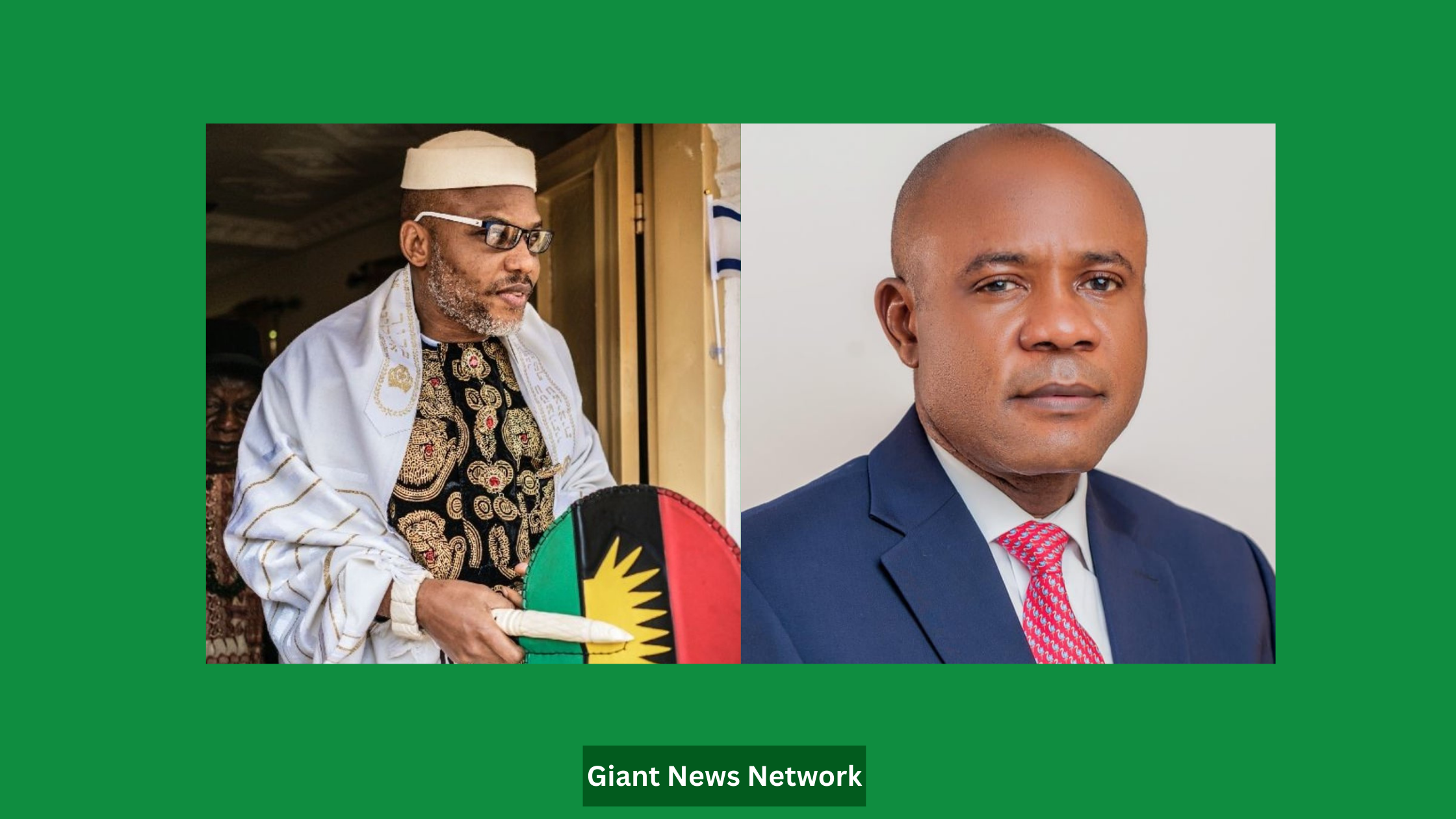
Former presidential candidate and political activist, Chief Martin Onovo, has declared that defeating President Bola Tinubu in the 2027 general election will be nearly impossible—unless Nigeria’s opposition parties form a strong, united front. Onovo made the assertion on Monday during an interview in Lagos.
Chief Martin Onovo, who contested the 2015 presidential election under the now-defunct National Conscience Party, insists that a fragmented opposition stands no chance against the ruling All Progressives Congress (APC) in 2027.
In his words, “The only way to defeat APC is through a formidable coalition. A united minority is always stronger than a divided majority.”
He threw his weight behind the proposed alliance being led by former PDP presidential candidate, Alhaji Atiku Abubakar, calling it “a step in the right direction” and a necessary path to reclaiming power from the APC.
Onovo, who claimed to have masterminded the largest political coalition in Nigeria’s Fourth Republic—the Coalition of United Political Parties (CUPP)—was confident that a well-structured opposition alliance could win by a landslide.
“If the coalition is not self-sabotaged, it will defeat the ruling party convincingly. Take it to the bank—it will work.”
Despite the optimism, Onovo issued a strong warning against internal betrayal and power struggles, describing them as the biggest threats to any political merger.
Shifting focus to the Tinubu administration’s mid-term performance, Onovo offered a blunt assessment. He noted that the government has underperformed in its promise to improve security and provide for the basic needs of the people.
He urged the President to “go beyond talk” and use the remaining years of his first term to enact policies that improve national security and economic well-being. Onovo also criticized the composition of Tinubu’s cabinet, calling for a shift from political loyalists to competent technocrats.
“The President needs to be clear about his objectives. He must prioritise the welfare and security of the average Nigerian—whether in the cities or rural communities. We don’t need loyalists; we need performers,” he said.
According to him, national development depends on assembling the right team, adopting the right strategies, and fostering an ethical leadership culture.
He added,
“We must not sacrifice performance for loyalty. What we need are commanders with vision—especially in security and economic sectors.”
Onovo concluded by advising the President to intensify the war against corruption and urgently address inequality, which he says is fuelling both insecurity and growing social unrest.
With the 2027 elections looming and political chess pieces already shifting, Onovo’s call for unity among opposition leaders underscores a broader national sentiment: the road to power may not be paved by ambition alone, but by strategic alignment, competence, and courage to put Nigeria first. Whether or not the coalition holds, only time—and political discipline—will tell.