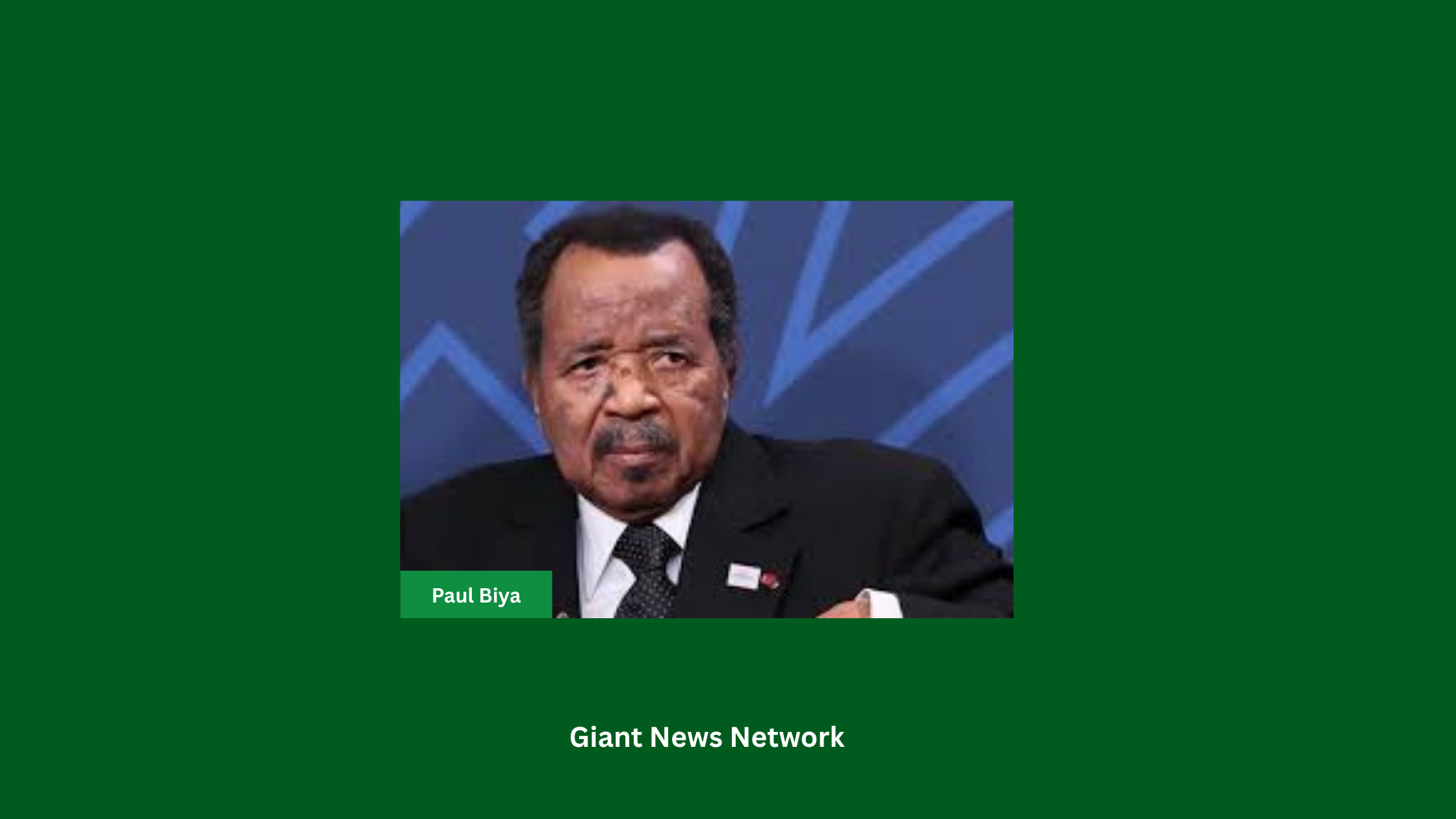
Cameroon’s longtime leader, President Paul Biya, has officially declared his intention to run for an eighth term in the October 2025 presidential election—despite being 92 years old, spending over four decades in power, and facing growing internal dissent from within his political coalition.
In a bold announcement posted on social media platform X (formerly Twitter) on Sunday, July 14, Biya confirmed what many already suspected—that he would once again be the presidential flag bearer for the ruling Cameroon People’s Democratic Movement (CPDM).
“I am a candidate for the 12 October 2025 presidential election. Rest assured that my determination to serve you is commensurate with the serious challenges facing us,” he wrote.
“Together, there are no challenges we cannot meet. The best is still to come.”
But Biya’s declaration is already stirring serious controversy both locally and internationally. Many are asking whether a man in his 90s, who has ruled since 1982, is still mentally and physically fit to govern a country grappling with armed conflict, economic hardship, and rising youth unemployment.
Mounting Dissent, Quiet Revolts from Within
Although Biya’s grip on power has endured through the decades, signs of fracture are beginning to show within his long-dominant political machine. In recent weeks, two notable figures in his inner circle have publicly broken ranks.
One is Issa Tchiroma Bakary, the current Minister of Employment and longtime loyalist, who resigned from his government post in June to run under his party, the Front for the National Salvation of Cameroon (FSNC).
The second defection came from Bello Bouba Maigari, former prime minister and a Biya ally for nearly three decades, who will contest the election under the National Union for Democracy and Progress (NUDP).
Both parties were until recently close allies of Biya’s CPDM, and their departure signals a growing sense of political fatigue among key players in the regime.
Divided Opposition, But Boiling Discontent
While Biya’s critics are growing louder, the fragmented opposition may once again be his greatest strength. Two of his most prominent challengers—Maurice Kamto, who was runner-up in the 2018 election, and Cabral Libii, a rising youth favourite from the Cameroonian Party for National Reconciliation (CPNR)—have yet to unite under a single coalition.
The window for declaring candidacy closes on July 21, leaving little time for last-minute unity talks. Still, analysts say public frustration is more palpable than in any election year in recent memory.
Inflation continues to surge, basic services are inadequate, and the youth unemployment rate remains stubbornly high. Added to this is the unresolved Anglophone separatist crisis, which continues to trigger sporadic violence in the country’s English-speaking southwest and northwest regions.
A Country on the Edge
Cameroon’s presidential system has concentrated enormous powers in Biya’s hands over the years, and critics argue that his prolonged rule has weakened key democratic institutions.
Yet, despite public discontent and international criticism, Biya has shown no signs of grooming a successor or stepping down voluntarily. His longevity in power places him among the world’s longest-ruling non-monarchical leaders.
With the October elections just three months away, all eyes are now on whether Biya’s ageing but deep-rooted political machine can once again carry him across the line—or whether this could finally be the twilight of his decades-long presidency.
For now, Cameroon is at a crossroads. The ruling party remains strong, the opposition remains fractured, but the people—many of whom were not born when Biya first took office—are watching, waiting, and growing increasingly restless.