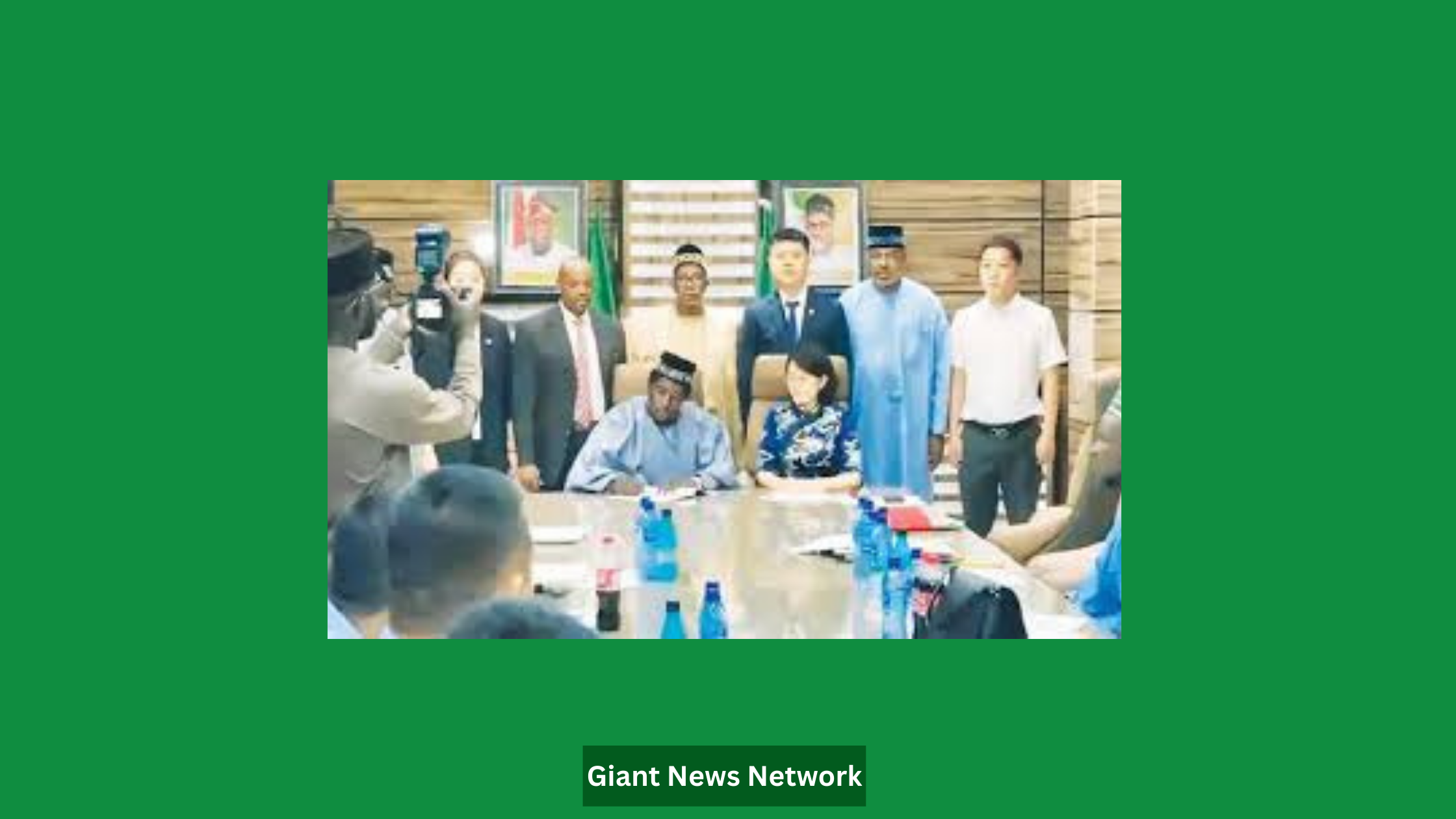
Governor Bala Mohammed of Bauchi State has appointed a Chinese national, Li Zhensheng, as Economic Adviser, a startling departure from established norms. This was announced during the signing of an MoU with the China Global Promotion Cooperation Research Centre in Bauchi State, Nigeria. Under the guise of boosting international ties, infrastructure, investment, and development across agriculture, healthcare, mining, education, manufacturing, trade, oil, and gas.
The Appointment That Raised Eyebrows
In a move that’s left tongues wagging, Governor Bala Mohammed brought in Li Zhensheng a Chinese national as his Chief Economic Adviser. While framed positively as a bid to elevate Bauchi as a “hub of international cooperation,” skeptics are calling foul. They’ve flagged it as a potential Trojan Horse—a symbolic first in a long line of troubling trends in Nigeria’s dealings with China.
Debt-Trap Diplomacy: The Persistent Shadow
Nigeria’s love affair with Chinese loans is not new. It’s maintained a staggering debt profile, with substantial borrowing that experts warn could erode the nation’s sovereignty over time. A research center even cautioned that the country’s increasing dependence on Chinese funding “could lead to a debt trap, compromising sovereignty and exposing national resources”.
This appointment comes amid mounting alarm about asymmetrical trade: Nigeria imports far more from China than it sends back, crippling local industries. The flow of cheap Chinese goods has decimated sectors like textiles and fuelled a rapidly growing debt—estimated at over $4 billion in recent years.
The Role Swap: Trust or Taken-For-Granted?
The move begs a sharper question: can Nigeria afford to trust any Chinese national, especially one serving in such a sensitive political post? Historically, we’ve seen Nigerians place faith in several non-citizen advisors—like Hu Jieguo, a Chinese expatriate who became a presidential adviser in the early 2000s—but none held such formal sway over economic policy.
Conspiracy Theories Taking Flight
Walk into any local market or social media thread, and you’ll hear it: “This is just another step in China’s slow takeover of Nigeria.” An ominous prophecy foretold years ago—that “the Chinese will rule Nigeria one day”—has suddenly reconvened in public discourse. People are linking the dots: endless loans, appointment of foreign advisers, and creeping economic control.
On Reddit, a user warned:
“For centuries… Africa has been exploited… today, China… control[s]… Africa through economic dependency, debt traps, and resource exploitation… we will be recolonized.”
While some experts argue the “debt-trap diplomacy” trope is oversimplified (and even questioned academically), the fear is very real among Nigerians—the nation may be inching toward a modern form of colonization.
Missing Pieces: Transparency and Trust
Notably, details of the appointment and the MoU’s terms remain vague. Without clear project specifics, KPIs, or transparency mechanisms, it’s easy for speculation—and suspicion—to run wild.
This appointment of Li Zhensheng, a Chinese national, as Governor Bala Mohammed’s Economic Adviser in Bauchi is far more than a bureaucratic decision—it has become a symbolic chess move in Nigeria’s fraught relationship with China. Is it a bold leap toward global cooperation or a sign of economic servitude? Only full transparency—and time—will tell.
For now, the winds are rife with conspiracy whispers, and Nigerians are watching closely. If the government wants to quell the storm, it must publish the MoU terms, outline project specifics, and ensure robust public oversight before the country drifts too close to the edge of dependency.
This report is evolving. We’ll keep you updated as more details surface.