Chikun LGA, Kaduna | May 18, 2025 — In a bold departure from conventional security tactics, the Director-General of the Department of State Services (DSS), Oluwatosin Ajayi, has unveiled a sweeping social intervention strategy that includes building schools, places of worship, and sports centres across Nigeria aimed at undermining terrorism by winning hearts and reshaping vulnerable communities.
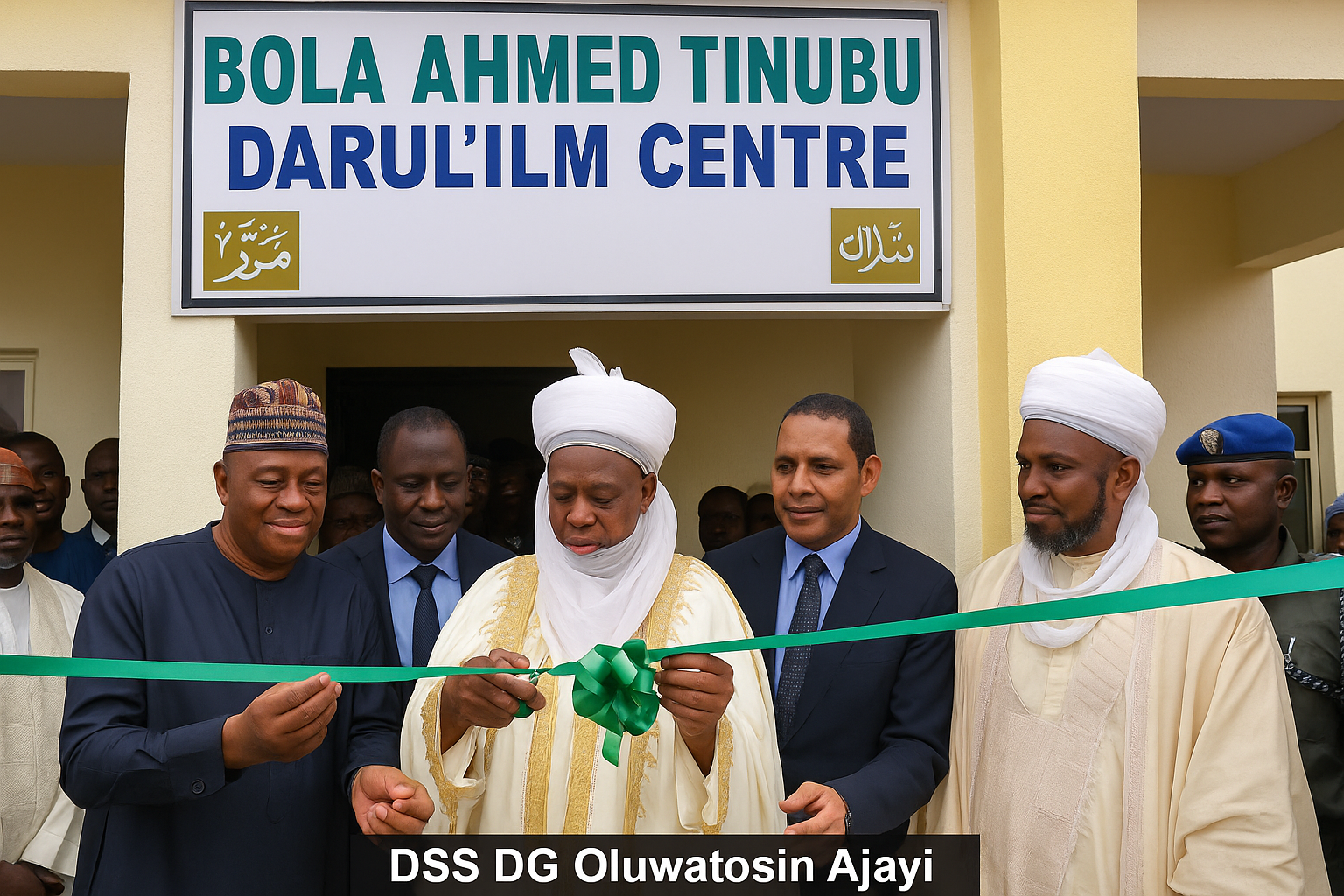
Speaking through retired DSS director Alhaji Ahmed Zalmar during the inauguration of the Bola Ahmed Tinubu Darul’Ilm Centre for Islamic Studies in Chikun Local Government Area of Kaduna State, Ajayi made it clear: the agency’s vision now reaches far beyond surveillance and enforcement.
“These projects are not funded through DSS operational budgets,” Zalmar relayed on behalf of Ajayi.
“They are powered by corporate social responsibility (CSR) contributions and private support from patriotic stakeholders.”
Ajayi, a Christian, personally funded and donated the Islamic centre — a gesture hailed by observers as a landmark act of interfaith unity and national healing. The school will serve orphans and underprivileged children, and is named after President Bola Tinubu, recognizing his administration’s commitment to education and social development.
“The DSS mandate is bigger than intelligence,” Ajayi noted. “It includes addressing the root causes of insecurity — poverty, ignorance, and exclusion. These projects help dismantle the conditions in which extremism thrives.”
The centre’s launch brought together religious and traditional leaders from across Nigeria — but it was the Sultan of Sokoto, Muhammad Sa’ad Abubakar III, who captured the spirit of the moment.
“This project sends a powerful message,” the Sultan said.
“When people of different faiths unite for the common good, we build the Nigeria we all dream of.”
He called the Islamic centre a “legacy project” and lauded the Tinubu administration’s appointment of Ajayi, saying it has helped “build bridges” of interfaith and inter-ethnic trust.
“If this kind of initiative is replicated nationwide, Nigeria will rise again. We must stop allowing religion to divide us,” he urged.
Also speaking at the event, Minister of Finance, Wale Edun, praised the DSS initiative, aligning it with President Tinubu’s economic blueprint which prioritizes inclusive growth and youth development.
“By 2050, Nigeria will supply a significant portion of the global workforce. Our best investment is education,” Edun declared.
Kaduna State Governor Uba Sani, represented by Deputy Governor Dr. Hadiza Balarabe, echoed the need for increased investment in education to tackle poverty and insecurity in the region.
Other dignitaries present included:
- Emir of Zazzau, Ambassador Ahmed Bamalli
- Kaduna House of Assembly Speaker, Dahiru Liman
- NSCDC Commandant-General, Ahmed Audi
- Several past and present DSS directors
The Sultan called on wealthy Nigerians to follow Ajayi’s example by building schools and supporting education for the disadvantaged and vulnerable.
“Only God will reward those who help orphans receive the education they deserve,” he said solemnly.
As Nigeria battles terrorism with boots on the ground and intelligence in the air, Ajayi’s strategy adds a third front — the hearts and minds of the people. By investing in hope and healing, the DSS may have quietly launched one of the most impactful counter-terrorism campaigns in recent memory.
Whether this soft-power approach will shift the tides of radicalisation remains to be seen, but one thing is clear: Kaduna just witnessed a glimpse of what a united Nigeria can look like.