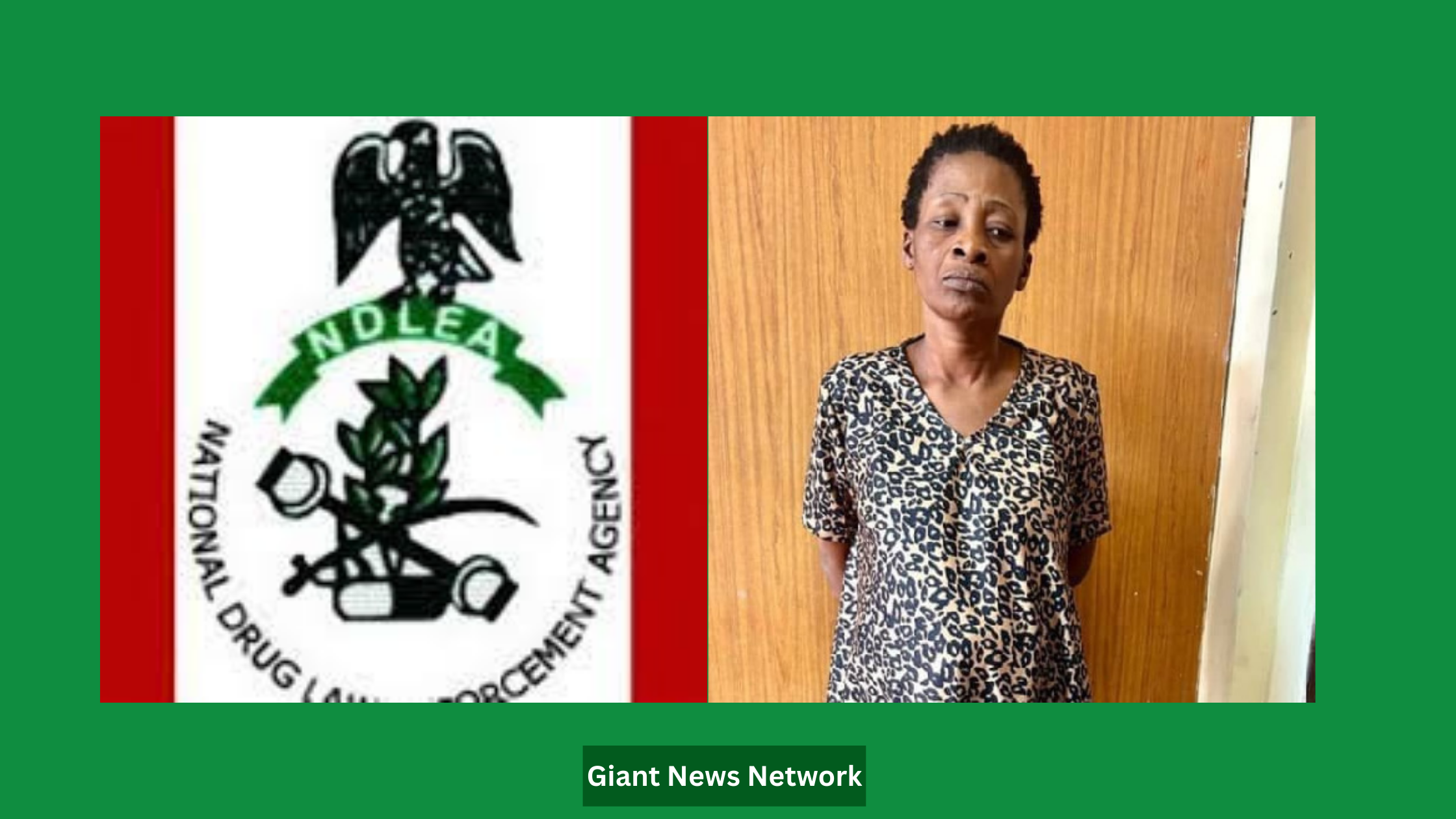
In a shocking twist that sounds like a Nollywood crime thriller, operatives of the National Drug Law Enforcement Agency (NDLEA) have arrested a 50-year-old widow, Mrs. Ifeoma Henrietta Ezewuike, for attempting to traffic cocaine while disguising herself as a heavily pregnant woman.
Ezewuike, a fashion designer and owner of Golden Star Creation in Okota, Lagos, was intercepted at a Jibowu bus terminal in Yaba on Friday while allegedly trying to deliver 1.3 kilograms of cocaine to customers in Abuja. What stunned investigators, however, was not just the quantity of drugs, but the disguise — a carefully padded “pregnant belly” meant to fool security checks.
“Inherited Crime” or Carefully Hidden Family Business?
During interrogation, Ezewuike, a mother of one, reportedly confessed that she “inherited” the drug trade from her late husband, who died two years ago. Despite being a designer for over two decades, she claimed her family had been involved in the shadowy world of narcotics long before.
This revelation has sparked uncomfortable questions: was her fashion business simply a front for laundering drug money? And how deep does this family’s connection to Nigeria’s booming underground drug economy go?
NDLEA spokesman, Femi Babafemi, disclosed that a follow-up raid on her residence along Ago Palace Way led to the recovery of 200 grams of a cutting agent — material typically used in processing cocaine for resale.
International Cartels, Kitchen Sinks, and Political Shadows
The widow’s arrest came amid a series of dramatic busts across the country. In Lagos, NDLEA operatives intercepted 90 parcels of “Loud” (a potent strain of cannabis) smuggled from the United States and hidden inside imported kitchen sinks.
In Adamawa, agents stormed the home of notorious drug lord Idris Garba. Though Garba managed a Hollywood-style escape by scaling his fence, his associate was caught in the act. The raid uncovered 354,480 tramadol pills and luxury cars reportedly used for drug logistics.
Kano wasn’t left out — multiple arrests there linked young dealers to hundreds of thousands of pills and large volumes of codeine syrup, deepening fears that northern states are quietly becoming opioid capitals.
Meanwhile, in Abuja, NDLEA detained two dispatch riders working as urban drug couriers, raising suspicions that everyday delivery networks are being hijacked by cartels.
The Bigger Picture Nobody Wants to Discuss
Ezewuike’s case is now at the center of public debate — not just because of the dramatic pregnancy disguise, but because it raises questions about how ordinary Nigerians are being sucked into drug networks under the guise of survival. A widow and mother of one, running a fashion business, yet allegedly neck-deep in cocaine trafficking?
Critics are already whispering about possible protection from powerful figures, noting how certain suspects conveniently escape while “small players” are paraded. The NDLEA’s increasing seizures suggest that Nigeria’s drug problem is far more entrenched, possibly tied to international cartels and local political elites.For now, Mrs. Ezewuike’s story will be remembered as the “pregnant widow cocaine scandal” — but the real drama may lie in what she knows, and whether she will live long enough to reveal the bigger names behind the business.